


Akai Mpc
Browse AKAI Professionals complete line of mpcs. Maker of televisions, audio and video equipment, and home appliances. Akai MPCs originally MIDI Production Center, now Music Production Controller are a popular series of electronic musical instruments produced by the Japanese company. Iconic music production instruments, including the legendary MPC. Akai Mpc' title='Akai Mpc' />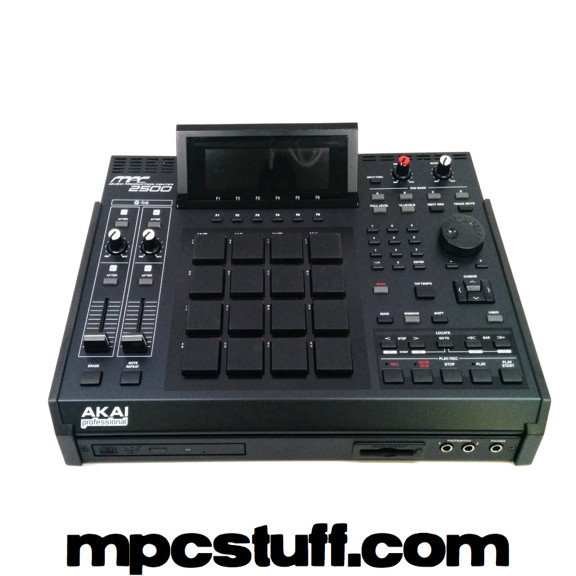 Music Production Controller Wikipedia. Akai MPCs originally MIDI Production Center, now Music Production Controller are a popular series of electronic musical instruments produced by the Japanese company Akai from 1. They are grooveboxes that combine features of a sampler, drum machine and MIDIsequencer. Akai Mpc' title='Akai Mpc' />HistoryeditThe original MPC6. Akai and Roger Linn, to design products similar to those of Linn Electronics. He developed the functional design, including the panel layout and softwarehardware specifications. He then created the software with a team of engineers. The hardware electronics were designed by English engineer David Cockerell and his team. Cockerell was a founding member of the synthesizer firm EMS co creator of their famous VCS 3 along with Peter Zinovieff3, and then worked for effects manufacturers Electro Harmonix. Akai then pioneered many processing techniques, such as crossfade looping and time stretch to shorten or lengthen samples without affecting pitch and vice versa. Intended to function as a powerful kind of drum machine, the MPC6. MIDIsequencer with the ability to sample ones own sounds. A major influence to Roger Linns design was his love of rubber pads and how they could be pushed, prodded, and banged this can be seen clearly in his designs especially from the MPC 6. Linn also had a passion for squares thus, no round pads on the MPC Series. I/41%2BVK9IHtZL._SY355_.jpg' alt='Akai Mpc' title='Akai Mpc' />Later models feature increasingly powerful sampling, storage, interfacing and sound manipulation facilities, which broaden the use of instrument beyond just drum and rhythm tracks. Shortly after the MPC6. MPC6. 0 II was designed. Released in 1. 99. MPC6. 0 II offered most of the same features as the MPC6. Akai-MPC-2000-XL.jpg' alt='Akai Mpc' title='Akai Mpc' />In 1. Akai released the MPC3. Hz sampling, 3. 2 voice polyphony, and SCSI data transfer. Akai tried to save money by dropping Roger Linn, the brainchild behind the MPC, to whom they would have to pay royalties on future models. The company developed and released the MPC2. Linn in 1. 99. 7. The MPC2. MB of RAM, an optional effects board, and a 1. The MPC2. 00. 0 was replaced by the MPC2. XL in 2. 00. 0. The MPC2. XL added an improved 3. Four limited edition models of the MPC2. XL were released. In 2. Akai unveiled the MPC4. MPC ever made higher bit depth and sample rate than the later 5. The MPC4. 00. 0 featured 8 assignable outputs, a hard drive and CD ROM drive. The MPC4. 00. 0s memory could be expanded to up to 5. Parts and accessories for the Akai MPC and Native Instruments controllers and samplers. Large selection of new and used custom music production equipment. Browse Akai Professional products and enjoy free shipping on thousands of Akai Professional gear 30 day returns. Save on our extensive selection of Akai Professional gear. Get the guaranteed lowest prices and free shipping on most Akai products at. View Akai MPC Element. Akai MPC X. 766 likes. The new standalone touchscreen flagship MPC from Akai. Akai give us a close up look at the new MPC Live standalone MPC. We examine the new features and hardware. New features include audio tracks, clips launch. MB of RAM, the largest amount on an MPC to date. Only two years after the release of the MPC4. Akai released the MPC1. MPC product line at the time of its release. It was also the first MPC to utilize Compact. Flash memory. 8 Both the MPC2. MPC5. 00 were added to the Akai MPC series in 2. The MPC2. 50. 0 is a mid range MPC with 8 assignable outputs and Compact. Flash storage. 9 Designed for portability, the MPC5. MIDI InOut and Compact. Flash storage, and can be powered by 6 AA batteries. At NAMM in 2. 01. Akai unveiled a line of controllers named the MPC Renaissance, and MPC Studio which work with MPC Renaissance software on Mac or Windows computers. Additionally they unveiled the MPCFly, an i. Pad 2 and i. Pad 3rd generation controller which runs on the i. Pad MPCFly app, available from the Apple app store. September, 2. 01. The MPC Renaissance was publicly released. The Renaissance is the first hybrid MPC combining the computer with MPC hardware. MPC ModelseditThe following MPC models are arranged in the order of their release date The MPC6. Hz sampler 9. 9 track sequencer designed in large part by Roger Linn after Linn Electronics closed. It was similar to the Linn 9. Akai released it in 1. It had 7. 50 k. B memory standard, expandable to 1. MB. The sequencer is very flexible and powerful, famous both for its swing setting, and its easy to use step programming. It had 2 MIDI inputs 4 MIDI outputs, allowing it to control up to 6. The sequencer itself was offered as a separate product, known as the ASQ1. The MPC6. 0 II was nearly identical to the MPC6. It was released in 1. Features41. 6 velocity sensitive pads. Hz freq response 2. Hz 1. 8 k. Hz1. ADC and DAC, with data stored in special non linear 1. B sampling memory 1. MB 2. 6. 2 seconds expansion card EXM0. MIDI inputs, 4 MIDI outputs. MIDI Time Code MTC, MIDI Clock, FSK2. SMPTE, 14 note click. SMPTE supported frame rates 2. Internal 3 floppy drive Double Density 7. Boptional 3rd party SCSI interface by Marion Systems1. MPC3. 00. 0editThe MPC3. MPC6. 0 by adding 1. Hz stereo sampling, increased memory, 3. SCSI. It was released by Akai in 1. The MPC3. 00. 0LE Limited Edition is identical to the MPC3. It was released by Akai in 2. Features51. 6 velocity sensitive pads Made of Soft Rubber4 pad banks 6. Hz stereo freq. response 2. Hz 2. 2. 1 k. Hz2 MB sampling memory 2. MB officially stated as 1. MB 6 minutesSPDIF stereo input. MIDI inputs, 4 MIDI outputs. MIDI Time Code, MIDI Clock, FSK2. SMPTE, 14 note click. SMPTE supported frame rates 2. Internal 3 floppy drive. SCSIMPC2. 00. 0editThe MPC2. It comes with 2 MB sample memory as standard, and can be expanded to 3. MB. It supports a sampling rate of 4. Hz, in 1. 6 bit stereo or mono. Features61. 6 velocity sensitive pads Invented by Roger LinnInternal 3 floppy drive. MIDI inputs, 2 MIDI outputs. MB sampling memory upgradable to 3. MBOptional effects board EB1. Optional 8 outputs and digital IO board IB M2. SCSI interface. MPC2. XLeditThe MPC2. XL is similar to the MPC2. XL, altering sounds to a different bit depth or sampling rate could be accomplished by resampling, time stretch was added along with other features. In 2. 00. 4 the 2. XL MCD version was released, which features a Compact. Flash card reader as standard in place of the floppy drive or Zip drives used in earlier models. There were 4 limited editions 2. XL SE MPCs created between 2. There were two versions of the SE 1, one with an improved control surface, compatible with growing number of sound libraries and one with aesthetic changes. The Limited Edition SE 2 and SE 3 also had only aesthetic changes. Features6Multi Voltage operation 1. VAC, 5. 06. 0 Hz, 1. W 2. 3W w optionsVelocity sensitive pads with chromatic assignment for key groups. Internal 3 floppy drive or 1. MB Zip drive upgradeable to a Zip 2. MB or MCD card reader 5 in 1 type with folder support for storage. Pad Bank keys. Adjustable angle screen. Advanced Installer 10.6 Keygen here. Time stretch with 1. MIDI inputs, 2 MIDI outputs. Note repeat key. MB sampling memory upgradable to 3. MB 3 min stereo6 min monoHigh Density 5. HD5. 0HPDB5. 0SCSI 2 SCSI interface. AKAI MPC2. 00. 0XL sample CD ROMOptional effects board EB1. Optional 8 outputs and digital IO board IB M2. Big Black Booty on this page. MPC4. 00. 0editReleased in 2. MPC4. 00. 0 was intended by Akai as a top of the range flagship product. Not only was it the most fully featured MPC product yet building on the MPC6. XL, but it also incorporated the sampling engine from the latest model in Akai standalone sampler range, the Z8. At the end of 2. 00. Akai revealed the MPC4. BL Plus which substituted the original white model in 2. The upgraded version featured some extra hardware extensions and came in a blue casing. It was discontinued between 2. The MPC4. 00. 0 was replaced by the MPC5. Features71. 6 velocity and pressure sensitive pads. MIDI inputs, 4 MIDI outputs. Hz 2. 4bit sampling. MB sampling memory, upgradeable to 5. MBIDE bays for installation of internal hard disk drive and CD ROM drive.